All Categories
Featured
China's growing existence in the cloud computing sector has actually raised concerns among states and organizations, particularly around information security, privacy breaches, unapproved access to information, and the transfer of information to external partiesespecially the Chinese government. Another issue is that data collected via Chinese cloud innovations might be made use of for functions beyond its initial intentsuch as user surveillance or commercial and security espionage. The Chinese company Alibaba Cloud ranks 4th with 4% of the international market.
The US companies Oracle and IBM follow at 3%and 2.5%, respectively, in addition to China's Tencent Cloud, which holds 2%of the global market. In Qatar, Bahrain, and Israel, US cloud suppliers dominate the regional market, while Chinese business have only a minimal existence. In contrast, in Egypt, the Chinese firm Huawei Cloud operates an active cloud region in Cairo, whereas the 3 major United States tech business AWS, Microsoft Azure, and Google do not currently operatecloud regions there. In Saudi Arabia and the United Arab Emirates, both United States and Chinese cloud providers are active, but the United States maintains a more prominent existence, with 12 cloud regions in Saudi Arabia and nine in the UAE. By comparison, China has 7 cloud areas in Saudi Arabia and one in Dubai. In March 2024, AWS announced plans to establish a cloud region in Saudi Arabia with an investment of $5.3 billion. In comparison, in Might 2024, Huawei Cloud released its first cloud area in Egypt and North Africa with a five-year financial investment of $300 million. China's investment volume and geographical spread in the Middle East remain minimal compared to those of the United States, Chinese business aremaking fast development into the market. China acknowledges the potential of emerging markets and the growing demand for sophisticated innovations in the Middle East, particularly in the Gulf region. The alignment of interests between China and countries in the area supplies a solid foundation for long-lasting cooperation, including in cloud computing. China seeks to take advantage of its technological strengths to get economic and tactical impact in the area, while Middle Eastern countries see China as anappealing partner for upgrading digital facilities and advancing technological innovationoffering services that are affordable, quickly executed anddevoid of political conditions. While still restricted in scope, this trend holds the prospective to gradually wear down US digital hegemony in the region.In Israel, Chinese cloud service providers have a limited existence, mainly catering to personal companies looking for affordable rates or those working in Asian markets. Alibaba Cloud services are available in Israel through the regional company Sela, which supplies support, assistance, and assistance to Israeli firms interested in utilizing Chinese cloud services.
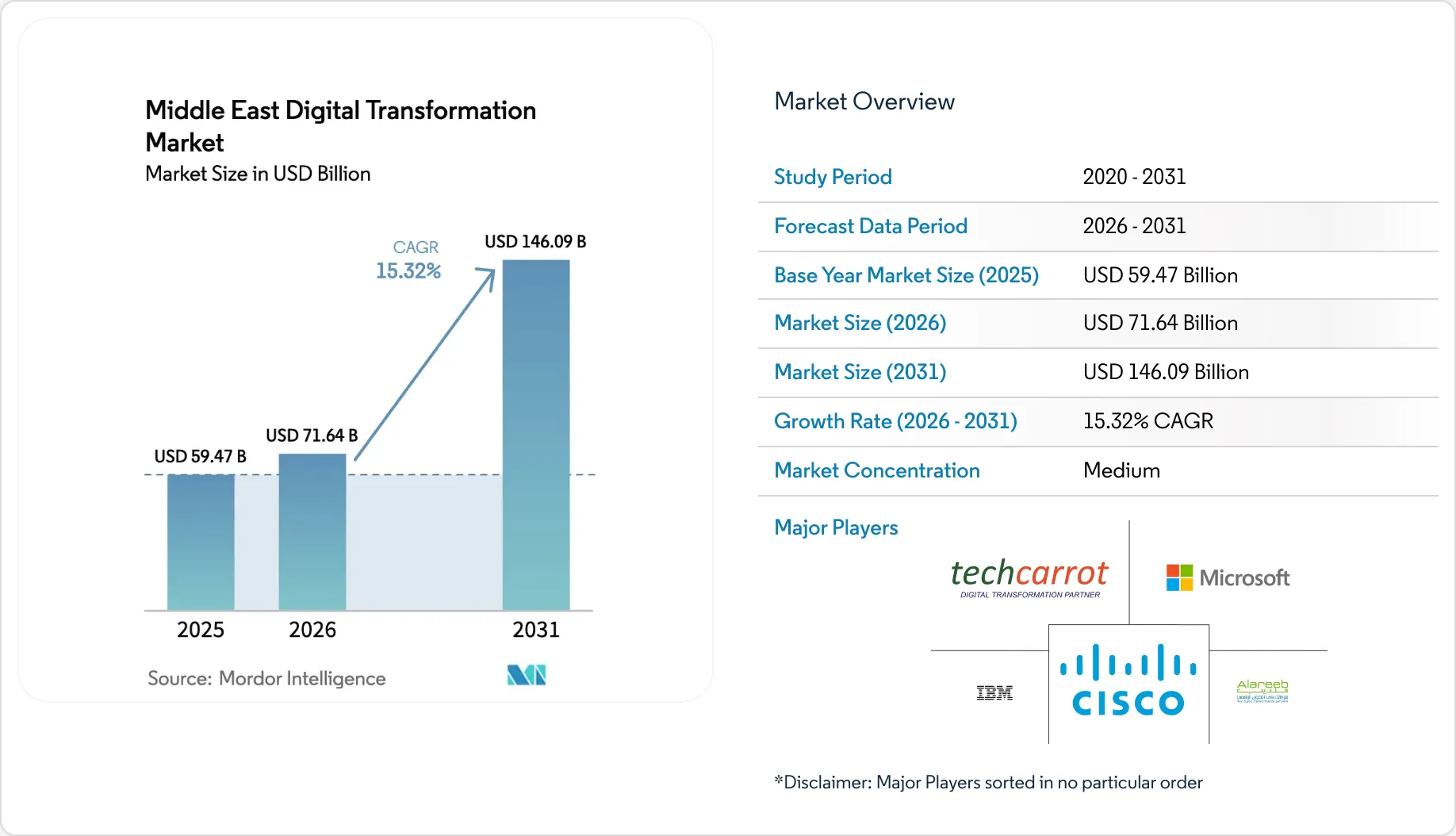
Initially, China's increase in the Middle East's cloud market, through investments in digital facilities and regional partnerships, adds another layer of tension to the continuous competition with the United States. This competition is not simply limited to technological aspects; it reflects a more comprehensive battle to form geopolitical spheres of impact, with the Middle East emerging as a crucial strategic arena.
A Roadmap for Riyadh’s Digital Payment Infrastructure by 2026Evolution of Cloud Tools in Middle East
Second, China's technological expansionespecially in Egypt, the United Arab Emirates, and Saudi Arabiademands strategic and diplomatic attention from Israel, as these are areas of direct geopolitical and security relevance for the nation. Third, while there is awareness in Israel about data security and the threats of foreign technological impact, the threats connected with Chinese cloud infrastructureeven in apparently neutral fields like clever vehiclesare not fully recognized.
These lorries are geared up with smart systems that collect real-time datasuch as place, car movement, and system performance. This data is transferred via cloud facilities and might be saved on servers in China or managed by Chinese companies, raising concerns about the potential usage of such info for espionage, intelligence gathering, or perhaps remote control.

Given the recurring reports and issues about Chinese companies violating data privacy and security, the usage of Chinese-made cars in Israelparticularly within federal government and defense institutionsshould be thoroughly assessed. This includes evaluating possible national security threats and considering more secure options for usage in sensitive environments. Because of the obstacles China provides in the technological and geopolitical arenas, it is essential that Israel completely examine the long-term ramifications of China's growing role as a local technological power.

Latest Posts
Why Advanced AI Is Crucial for 2026 Growth
Implementing Advanced AI to Scale Digital Roadmaps
The Role of AI in 2026 Market Growth