All Categories
Featured
I think we [will] all become AI composers, whether you're an online marketer, programmer or PM." Many believe efficiency will be the brand-new frontier. "GPUs will remain king, but ASIC-based accelerators, chiplet styles, analog inference and even quantum-assisted optimizers will grow," Kaoutar El Maghraoui, a Principal Research Study Researcher at IBM, said during today's Mixture of Specialists.
And open-source thinking models and representatives will keep pressing borders to dominate enterprise AI. At the very same time, trust and security will become crucial concerns as numerous business hone their concentrate on AI sovereignty. That's just the opening act for what's to come in enterprise tech in the days ahead.
AI is moving from experiments to systems. For much of the previous decade, AI has actually lived in a familiar pattern: appealing pilots, remarkable demonstrations, and separated wins that hinted at transformation but seldom reshaped core systems. For much of the previous years, AI has actually lived in a familiar pattern: appealing pilots, remarkable demos, and separated wins that hinted at improvement but rarely reshaped core systems.
Throughout companies, AI is no longer restricted to innovation labs or side jobs owned by small information groups. It is being embedded directly into software application architectures, advancement workflows, functional decision-making, and customer-facing platforms. The shift is subtle however substantial: AI is ending up being a core infrastructure, not an add-on. Together, these shifts specify the leading AI trends in 2026, marking a clear move from speculative tools to operationally embedded systems.
For technology leaders, this minute feels various from previous AI hype cycles. Earlier phases concentrated on capability: could designs generate text, recognize images, or anticipate outcomes? In 2026, the focus will move to integration: how AI systems interact with existing platforms, how they scale dependably, how they are governed, and how they provide quantifiable value under real-world restraints.
Rather of functioning as a reactive tool that awaits triggers, AI is significantly designed to function as a partner, one that can translate goals, coordinate tasks, and run across systems with a degree of autonomy. This transition has architectural implications as much as organizational ones, demanding brand-new methods to software application design, information management, and system orchestration.
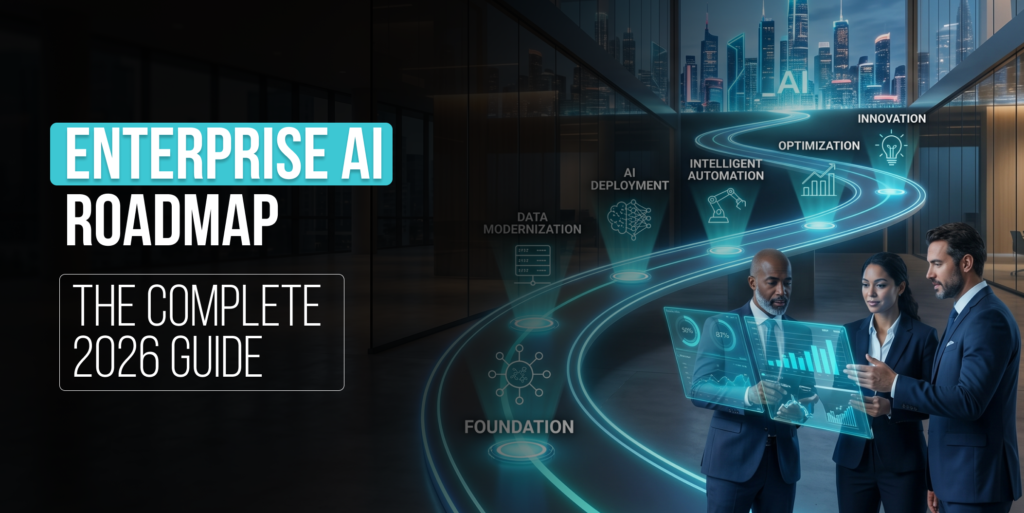
Understanding the top AI trends in 2026 requires looking beyond individual models and focusing on how AI is engineered into real systems. Below, let's look at what the leading AI trends in 2026 are.
Implementing Applied AI Strategies for Global Businesses
By 2026, that chapter may end. The next phase of AI is not conversational, it's agentic. Agentic AI describes systems created around goals rather than triggers. Instead of awaiting instructions, these systems can translate intent, plan series of actions, and adapt their behavior based upon results. The shift is subtle in concept but heavy in execution: AI is no longer simply reacting to users; it is starting to operate within systems.
Where earlier AI combinations concentrated on improving private functions: search, recommendations, material generation, genetic systems cut throughout workflows. They connect information sources, coordinate jobs, and run asynchronously across time and services. In practice, this implies AI is coming closer to the role of an orchestrator than a function. Early agentic tools frequently relied on a single, general-purpose agent entrusted with doing "a bit of whatever." That technique is now showing its limits.
Scaling the Invisible Framework of Tomorrow’s Gulf MetropolisesThe emerging pattern in 2026 is multi-agent orchestration: systems made up of specialized representatives, each accountable for a discrete function, coordinated by a higher-level controller. This mirrors recognized software application architecture concepts, where dispersed services changed monoliths to enhance durability and scalability. For innovation leaders, the implication is clear: agentic AI is less about individual models and more about system design.
The example is instructional. Just as microservices presented versatility at the expense of increased architectural complexity, agentic systems assure higher levels of automation while requiring more powerful foundations.

Latest Posts
Steps for Developing Digital Frameworks
Will Applied AI Transform the 2026 Digital Roadmap?
Role of AI in 2026 Business Growth