All Categories
Featured
Table of Contents
Best for task-based automation Workato stays a strong choice for task-based automation, providing recipe-based workflow style and a substantial community-supported app community. It's appropriate for companies looking for prebuilt, one-off automations across marketing, financing, HR, and operations, where information volumes are fairly low Best for legacy combination Boomi masters environments with older infrastructure and deeply ingrained legacy systems.
Best for SMB and no-code automation Zapier continues to dominate in little organization and start-up environments. Its no-code interface and vast app library make it easy to automate fundamental workflows, though it's less fit for enterprise governance or complex combinations.
This method works well for business with a large IT group to handle the numerous API layers or a partner that helps with a prolonged implementation timeline. With options covering no-code tools to business integration suites, choosing the right automation platform begins with clarity on your objectives. Identify what success appears like.
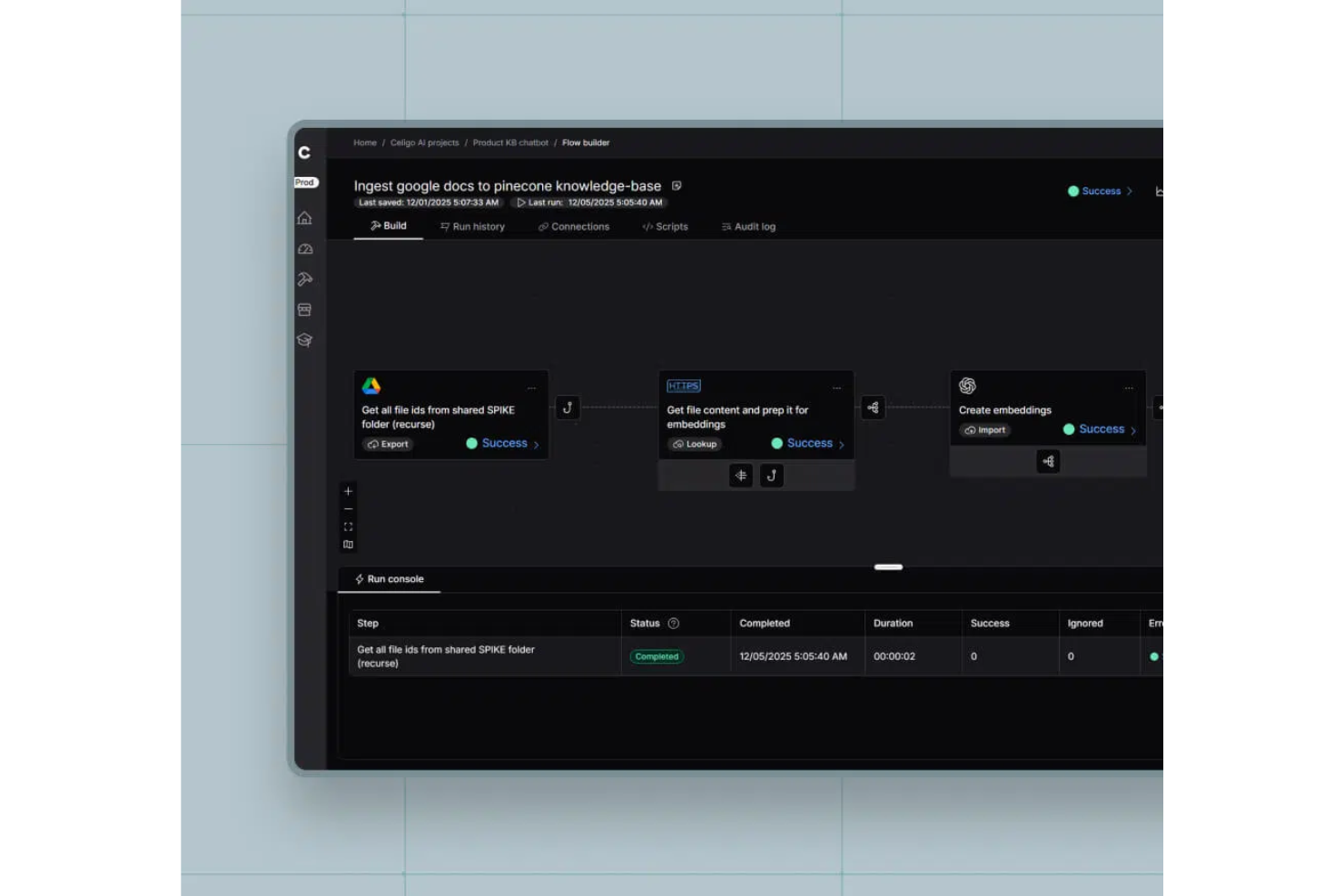
Make sure the platform supports your current and future community. Look for flexible APIs, prebuilt ports, and scalability that supports multi-departmental growth. Start smallpilot a few automations, procedure performance, and fine-tune. The very best automation programs develop iteratively, expanding across departments once success is shown. Celigo supports this journey through recyclable workflow templates, built-in analytics, and a modular architecture that scales as automation maturity grows.
The organizations that prosper will be the ones that can build rapidly, run reliably, and adapt quickly as their requirements progress. Whether you're lowering functional friction or ensuring integrations stay safe and secure and scalable, the platform you choose will figure out how much agility you can open. Celigo's Intelligent Automation Platform reflects this new era.
Recent Tech Updates From the UAE Digital Sector
It's the direction automation is headed, and it's how IT leaders will get ready for what comes next. See how Celigo's Intelligent Automation Platform helps organizations bridge AI Agents, automation, and orchestration by unifying workflows, scaling integrations, and accelerating transformation.
Some automation tools promise the world then break after five actions, while others run your whole organization in the background. I tested the most talked-about automation platforms of 2026, throughout workflows, pricing, ease of use, and real-world reliability. Here are the 7 finest automation tools that delivered as assured. UiPath: Finest for enterprise-scale agentic automationZapier: Finest for no-code app adaptersAutomation Anywhere: Best for complex, AI-driven workflowsBlue Prism: Best for compliance-heavy business opsWorkato: Finest for cross-tool procedure orchestrationn8n: Best for Developer-Grade Control Without the Enterprise BloatMicrosoft Power Automate: Finest for Microsoft-centric business Automation software automates repetitive jobs or procedures with very little human input, helping teams conserve time, lower errors, and increase efficiency.
Essential Strategies for Developing High-Impact AI SystemsSome tools use simple rule-based logic, while others use AI to make choices in genuine time. You'll discover automation software application in all type of functions, whether it's a chatbot certifying leads, a robotic handling billing processing, or a workflow builder that assigns tasks and notifies your team. Depending upon the tool, it may run behind the scenes (like Zapier or UiPath) or work together with you like an AI co-pilot.
UIpath lets enterprises construct sophisticated automation using AI representatives and RPA bots. Best for IT, finance, and assistance groups in large companies. UiPath is developed for scale. Its Automation Center lets your entire group pitch and focus on automation ideas in one location, making it much easier to decide what's worth structure.
When I evaluated it, I set up a representative to manage a multi-app support situation. It pulled client data from Salesforce, ticket status from ServiceNow, and order info from SAP, all without me manually connecting each step.
Accelerating AI Innovation and Strategic Frameworks
The platform's strength lies in how well it fits into existing systems. Its integrated privacy controls likewise make it much easier to keep sensitive workflows protected.
Integrated testing and version control for reliabilityHuge market of plug-and-play componentsSupports AI timely flows within enterprise automations Long setup time for agentic workflowsSteep learning curve for non-technical users Access to Orchestrator, attended bots, and standard tools Zapier connects apps and automates workflows with zero coding. Perfect for solo operators, marketers, and non-technical groups.
Where Zapier wins is its community. It gets in touch with more than 9,000 apps consisting of Concept, Trello, Discord, HubSpot, and more. The Templates area is complete of prebuilt automations that work out of package. Just modify the steps and you're up and running. You can also save time with Zapier Tables, which lets you handle and manipulate structured data like a light-weight database.
Optimizing Cloud Infrastructure in GCC Regions
It worked effortlessly with other apps, creating a smooth handoff throughout platforms. That stated, rates can spike quickly if you use multi-step Zaps or run high volumes. And if a connected app alters its API, some Zaps might break without caution. Still, Zapier's documentation and assistance group make it easy to recover quick.
Automation Anywhere is created for major business usage. It runs on Agentic Process Automation (APA), which goes beyond rule-based RPA by making it possible for AI agents that make decisions based on real-time context and your organization data.
Essential Strategies for Developing High-Impact AI Systems
It embeds straight into apps like Salesforce and SAP, where it recommends next steps, obtains records, or fills forms, all from within your existing tools. It's context-aware and actively reacts to user input without changing tabs or tools. The platform's AI representatives are developed utilizing retrieval-augmented generation (RAG), which indicates they integrate LLMs with direct data pulls from your item catalogs, understanding bases, and CRMs.
You can begin with prebuilt AI agents or construct your own utilizing pre-trained skills, then connect them to cloud platforms like AWS or Google Cloud. While the innovation is outstanding, it's not beginner-friendly. There's limited community support, and group partnership is a discomfort point; only one person can modify a bot at a time, which slows group work.
Provides pre-trained AI abilities for faster deploymentSupports protected multi-cloud and on-prem setupsBuilt-in controls for compliance and audit readiness Team collaboration is restrictiveLimited peer community and shared resources Requires a demo demand; prices depends on scale and service needs BluePrism automates company workflows with a concentrate on compliance, governance, and enterprise control.
Evaluating Leading Cloud Systems in 2026
Blue Prism has actually long been a heavyweight in enterprise automation, and its recent updates make the platform more functional without jeopardizing control. Formerly, the Application Modeler, utilized to train bots by mapping out UI elements, was tiresome.

Latest Posts
Why Advanced AI Is Crucial for 2026 Growth
Implementing Advanced AI to Scale Digital Roadmaps
The Role of AI in 2026 Market Growth