All Categories
Featured
Table of Contents
Offer a defensive analysis relating to privacy, with Amazon saying there is "no automatic access to data," and specifying that it has actually not disclosed the material of government/institutional clients stored outside the United States to the U.S.
Around 35% of cloud service centers in the region belong area American companies, business 31 centers, while Chinese-owned centers account for about 8%, with 7. Iran, meanwhile, relies completely on 4 domestic business, giving it 100% local cloud facilities. Overall, 42% of the region's cloud services are offered by regional or various international business.
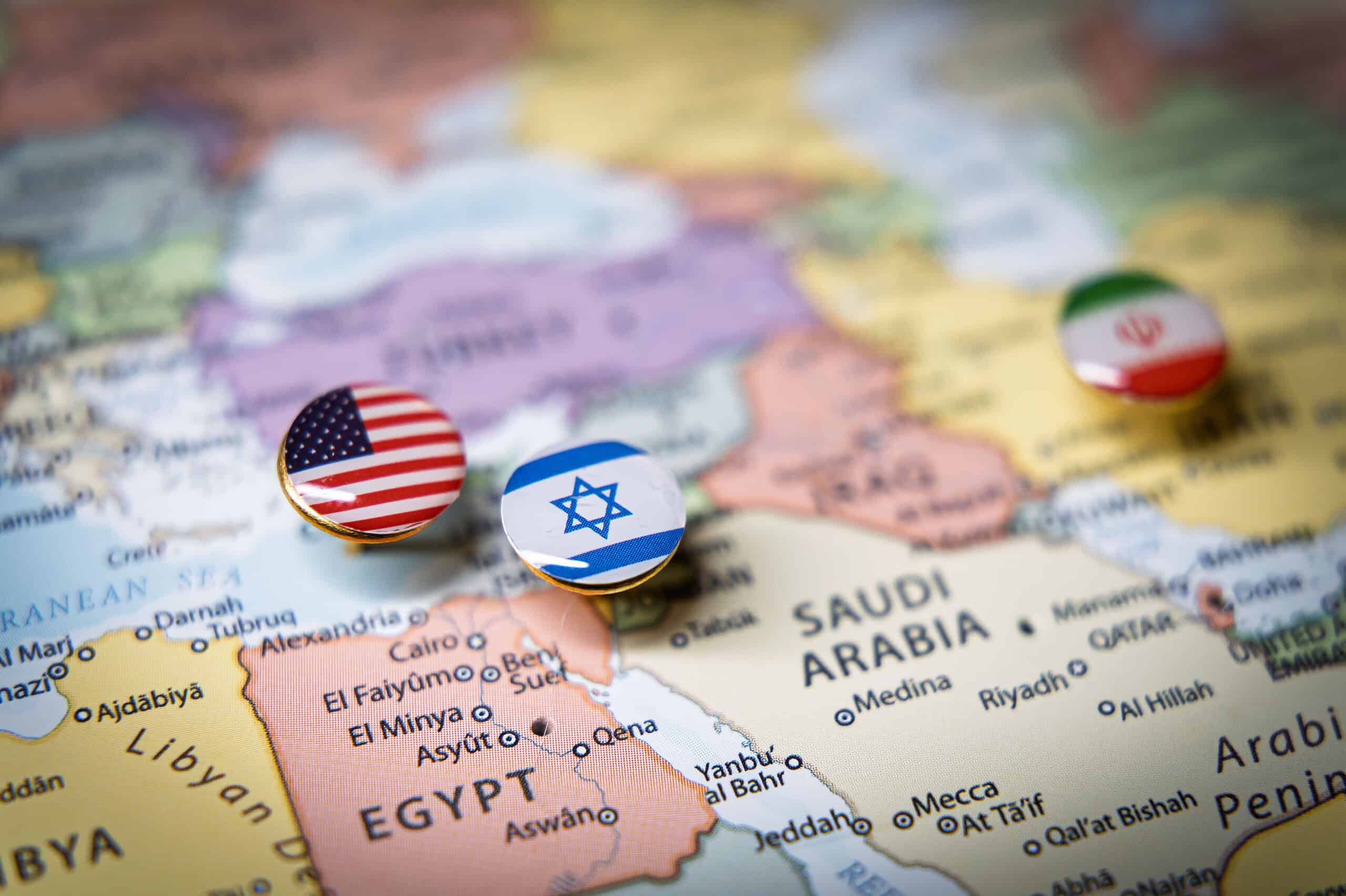
Overall, every Gulf country has a U.S. cloud presence. Israel relies 100% on American service providers, consisting of Microsoft, Google, Amazon, and Oracle. Iran: The cloud ecosystem is efficiently localized. The research study clearly discovered that the Iranian state has, throughout the years, developed an facilities that keeps vital services running domestically even if international connection is cut off through the National Information Network (NIN).

How GCC Startups Scale in the AI Market
sanctions. Majority of the cloud releases in the area (51%) were released after 2020, with 46 centers out of an overall of 89 developed throughout that period. 89 centers each nationality's share of total existences Number of presences/centers in the area Total cloud existences per nation Stated service type/sector Program the in-depth table for all centers (89 centers) #CountryLocationCenter nameOperatorNationalityOwnerYearClassificationCoverageAZ The examination focused on studying all cloud service centers in the Middle East and North Africa area, across their three categories in regards to size and capacity to supply services: All hyperscaler centers are run by worldwide business such as AWS, Azure, Google, and Oracle, most of which are located in the Gulf states and "Israel." Other nations save their information in regional federal government data centers or regional telecom-company data centers, which fall within the second and 3rd tiers of the categories.
In cases of conflict or sanctionsas in Syria and Yemenbarriers boost due to the fact that of compliance limitations and damage to infrastructure. Cloud computing services are a design that enables "on-demand" access to shared computing resources (networks, servers, storage, applications, and services) that can be rapidly provisioned and launched with very little administrative effort.
numerous different sites/data centers within the region, designed to minimize single points of failure, with separation in power, cooling, physical security, and low-latency network connectivity. There are also layers of cloud services or service delivery designs (IaaS/PaaS/SaaS) and deployment and use designs (public/private/hybrid/ neighborhood), which are a fundamental part of understanding and assessing threats and sovereignty over cloud service centers in the countries that host them.
Information analytics and expert system: cloud centers provide massive computing and storage capability to run information analytics for states and federal governments, artificial intelligence, and AI work that need specialized and massive hardware. This, for example, is one factor behind the race by information centers and AI to establish a presence in the Gulf and provide services there.
Evaluating Cloud Systems for the Middle East
This is the reasoning behind designing schedule zones within an area, or throughout multiple regions when laws permit. The kind of cloud service use depends upon each country's policy and its data classification, however the most common patterns in the general public sector include: individual information, documents, residency records. taxes, customizeds, and federal government procurement.
Fragility in the face of non-cloud bottlenecks: Even if data centers are not bombed, submarine cables and internationalconnectivity can cause severe congestion/degradation in cloud services. The cloud services industry represents a huge worldwide market, and spending on it is progressively increasing year after year with the advancement and expansion of synthetic intelligence services., the research study, consulting, and details innovation firm, expects IT spending in the Middle East and North Africa to reach 169 billion dollars in 2026, and states mentions" data center systems"are the fastest-growing industry, estimated approximated 12.984 billion dollars in 2026.

Latest Posts
Why Advanced AI Is Crucial for 2026 Growth
Implementing Advanced AI to Scale Digital Roadmaps
The Role of AI in 2026 Market Growth