All Categories
Featured
Table of Contents
For its part, the U.S. Department of Justice discusses that the CLOUD Act has actually allowed bilateral executive arrangements to assist in access to information in cases including "serious criminal activities," within safeguards to safeguard rights. By contrast, companies such as AWS Offer a protective analysis relating to privacy, with Amazon saying there is "no automated access to data," and specifying that it has actually not revealed the material of government/institutional clients stored outside the United States to the U.S.
Around 35% of cloud service centers in the region belong to American companies, business 31 centers, while Chinese-owned centers account for about 8%, with 7. Iran, meanwhile, relies totally on four domestic business, providing it 100% local cloud infrastructure. In general, 42% of the region's cloud services are provided by regional or various international business.
Overall, every Gulf nation has a U.S. cloud presence. Israel relies 100% on American suppliers, consisting of Microsoft, Google, Amazon, and Oracle. Iran: The cloud ecosystem is successfully localized. The research study plainly discovered that the Iranian state has, for many years, developed an infrastructure that keeps critical services operating domestically even if worldwide connection is cut off through the National Info Network (NIN).

How to Build Roadmaps for AI in 2026
More than half of the cloud releases in the area (51%) were introduced after 2020, with 46 centers out of an overall of 89 established throughout that duration. Other countries keep their information in regional government data centers or regional telecom-company information centers, which fall within the second and third tiers of the classifications.
In cases of conflict or sanctionsas in Syria and Yemenbarriers boost because of compliance constraints and damage to facilities. Cloud computing services are a design that makes it possible for "on-demand" access to shared computing resources (networks, servers, storage, applications, and services) that can be quickly provisioned and launched with minimal administrative effort.
a number of different sites/data centers within the region, developed to reduce single points of failure, with separation in power, cooling, physical security, and low-latency network connectivity. There are also layers of cloud services or service shipment designs (IaaS/PaaS/SaaS) and release and usage designs (public/private/hybrid/ neighborhood), which are a vital part of understanding and assessing threats and sovereignty over cloud service centers in the countries that host them.
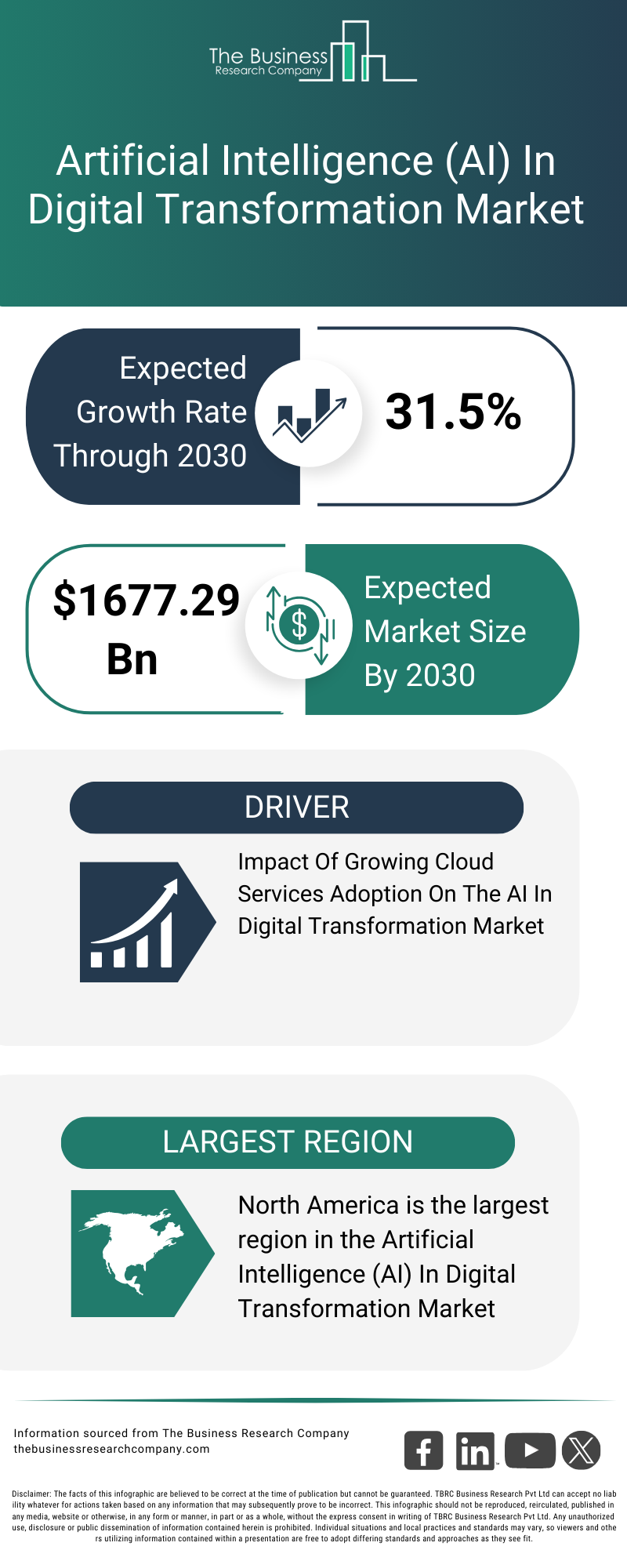
Data analytics and expert system: cloud centers provide enormous computing and storage capability to run data analytics for states and federal governments, artificial intelligence, and AI work that need specialized and large-scale hardware. This, for instance, is one factor behind the race by data centers and AI to develop an existence in the Gulf and supply services there.
Leading Digital Innovation Strategies for the GCC
This is the reasoning behind designing availability zones within a region, or throughout several regions when laws enable. The kind of cloud service use depends upon each nation's policy and its data classification, but the most typical patterns in the general public sector include: personal data, documents, residency records. taxes, customs, and federal government procurement.
the Web of Things, picking up, traffic, energy/water. frequently heavily restricted and separated, or special/sovereign environments are constructed for it depending on category level of sensitivity. This is where the value of deployment models (private/hybrid cloud)ends up being clear: lots of federal governments tend towards a hybrid approachpartly on a public cloud for less delicate work, and partly on a private/sovereign cloud for more sensitive ones. The RUSI research institute says that the targeting of data centers in the Gulf on March 1, 2026 developed worldwide doubts about the strength, sovereignty, security, and fragility of these centers, keeping in mind that data centers may be dealt with as strategic properties and "crucial infrastructure,"specifically if they are believed to support defense/intelligence capabilities alongside civilian services. The threat is not just"losing files,"however digitally disabling and immobilizing states. It can be summed up in five points: Important service blackouts (Schedule Shock): If banks, payments, civil service platforms, or significant companies depend upon the impacted region, the interruption quickly affects the public and the economy. RUSI pointed to broader interruption to financial and customer services after the Gulf strikes. Fragility in the face of non-cloud traffic jams: Even if information centers are not bombed, submarine cable televisions and worldwideconnectivity can cause extreme congestion/degradation in cloud services. Example: cuts to cable televisions in the Red Sea impacted Azure paths and increased latency in South Asia and the Gulf. The cloud services industry represents a huge global market, and spending on it is gradually increasing every year with the advancement and growth of artificial intelligence services. Regionally, Gartner, the research, consulting, and infotech firm, anticipates IT costs in the Middle East and North Africa to reach 169 billion dollars in 2026, and mentions that" data center systems"are the fastest-growing industry, approximated at 12.984 billion dollars in 2026. McKinsey, on the other hand, describes public cloud centers in the Middle East as a"multibillion-dollar chance" linked to digital change and onethat is highly scalable. This is either due to the fact that they vary consumption-based agreements, framework contracts, or part of wider procurement portfolios (digital transformation)that are not publicly itemized. However, the following can be determined: According to a news report released by Arab News last year, the value of federal government agreements in the ICT(Info and Communications Innovation)sector reached SAR 38 billion in 2024(roughly US$ 10.13 billion), with a focus on cloud computing and artificial intelligence as concerns. In 2024, Amazon announced the building of 2 cloud areas in Saudi Arabia at a cost exceeding US$ 5.3 billion. In the exact same year, Oracle Announced the launch of a 2nd public cloud area in Saudi Arabia to "enhance the AI economy,"with a financial investment of US$ 1.5 billion. In March 2025, the Abu Dhabi federal government revealed its objective of automating 100 %of government operations, supported by a financial investment of up to AED 13 billion(US$ 3.54 billion)in digital facilities under the Digital Technique 20252027, alongside sovereign cloud arrangements with Microsoft and Core42. In November 2025, the state-owned business qnbn revealed the signing of a multi-year contract with Microsoft to offer cloud computing services targeted at"speeding up digital improvement and expert system,"though the contract's worth was not disclosed.

Latest Posts
Why Advanced AI Is Crucial for 2026 Growth
Implementing Advanced AI to Scale Digital Roadmaps
The Role of AI in 2026 Market Growth